
The unmanned aerial systems (UAS) sector is no longer an emerging technology space. It is a mature, contested, and strategically significant industry. The war in Ukraine has made that undeniable. Commercially developed FPV drones, originally designed for racing and aerial photography, have been adapted into precision strike systems at a fraction of the cost of conventional munitions. Ukrainian forces have deployed swarms of modified DJI-derived platforms for reconnaissance and targeting, while both sides have invested heavily in electronic countermeasures to defeat them. The conflict has compressed what would otherwise have been a decade of military UAS development into a matter of months, and it has done so largely on the back of commercial innovation.
For UK drone manufacturers, this creates extraordinary commercial opportunity. It also creates serious legal exposure. The technology you are developing today may attract interest, and imitation, far beyond its original use case. If your intellectual property is not properly protected, you risk losing control of it at precisely the moment its value is highest.
What Constitutes IP in the Drone Sector?
Intellectual property (IP) encompasses the legal rights arising from original creative and inventive activity. For drone manufacturers, protectable IP is embedded throughout the product lifecycle: airframe aerodynamics, flight control architecture, proprietary battery management systems, payload integration mechanisms, sensor fusion algorithms, ground control station software, and encrypted communications protocols. Operational methodologies, training materials, and technical documentation also carry IP value that is frequently underestimated. If your business has engineered a solution to a technical problem, there is a reasonable prospect it is protectable. The question is not whether you have IP. The question is whether you have secured it.
Copyright
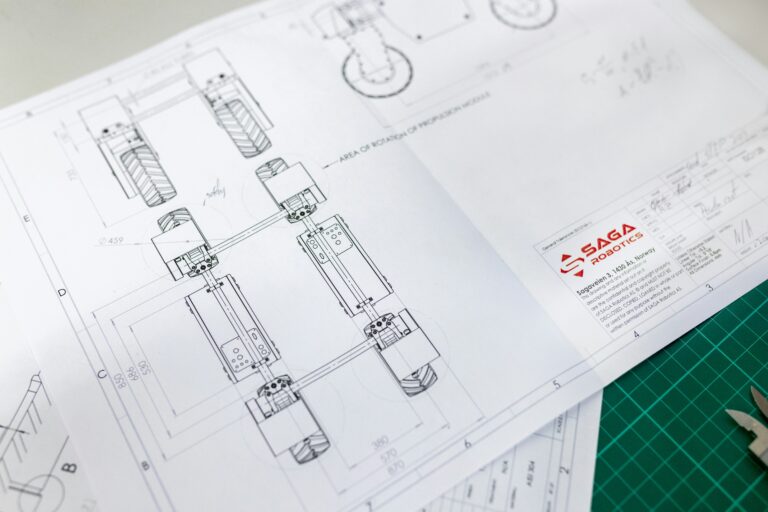
Copyright arises automatically upon creation and requires no registration, protecting original literary, artistic, and software works for up to 70 years after the death of the author. For drone manufacturers this covers firmware, source code (also protected separately by database rights), technical drawings, system architecture documentation, and ground control software.
The critical issue is rarely the existence of copyright, but its ownership. Copyright vests in the author by default. Consider a start-up that contracts a freelance developer to build its autopilot stack under a standard consultancy agreement. If that agreement contains no IP assignment clause, the developer, not the company, owns the copyright in that code. This is not a hypothetical risk. It is one of the most commonly identified gaps during investment due diligence and government procurement audits, and it can be both commercially damaging and difficult to remedy after the fact. Review all contractor and employment agreements now.
Trademark
A registered trademark provides exclusive rights over the names, logos, and identifiers that represent your brand in the marketplace. UK registration lasts 10 years and is renewable indefinitely. In the UAS sector, where customer confidence among government, defence, and critical infrastructure clients is hard-won, brand integrity has real commercial value.
The risk of operating without registration is straightforward. A competitor launches a similar product under a near-identical name in the same market. Without a registered mark, your options are limited and expensive, requiring you to establish goodwill through use, which is a slow and uncertain process. A timely registration would have provided an immediate and enforceable remedy. For manufacturers with international ambitions, note that trademark rights are strictly territorial. A UK registration affords no protection in the EU, the United States, or the Gulf states. File in the markets that matter to you early.
Patent
The patent is, for most drone manufacturers, the most strategically valuable form of IP protection available. A granted UK patent confers the exclusive right to prevent third parties from making, using, selling, or importing your invention for up to 20 years from filing. In a sector defined by rapid technical development and intense competitive pressure, that exclusivity is a significant commercial and defensive asset.
Ukraine has illustrated precisely how fast that development moves. Advances in low-observable airframe design, electronic countermeasure resilience, autonomous target recognition, and coordinated swarming behaviour have moved from experimental to operational in compressed timeframes. Each represents potentially patentable innovation. The manufacturers who file early establish prior art, deter competitors, and create licensable assets that generate value independently of their product sales.
To qualify, an invention must be novel, involve an inventive step, and be capable of industrial application. The process typically takes three to five years from filing to grant, with professional fees in the region of £6,000 to £10,000. Weigh that against the alternative: a competitor replicates your proprietary obstacle avoidance system, files a patent ahead of you, and uses that registration to block your own manufacturing and export activity. It has happened in the UAS sector. The consequences can be existential.
One rule above all others: do not publicly disclose an invention before filing. Presenting at DSEI, publishing a technical white paper, or briefing a prospective customer in detail can constitute prior art that invalidates a subsequent application. The priority date established by filing, not the date of invention, determines your legal position. Where disclosure is unavoidable before filing, a non-disclosure agreement provides some protection, but it is not a substitute for timely filing.
Design Right
Design rights protect the visual and aesthetic characteristics of a product, its shape, configuration, contours, and overall appearance, as distinct from how it functions, which is the domain of patent law. In the drone sector, where aerodynamic efficiency, modularity, and low observability inform industrial design as much as aesthetics, design rights and patents will frequently operate together to provide layered protection.
Unregistered design right arises automatically in the UK, covering an original design for up to 10 years after first sale or 15 years after creation. It costs nothing but is difficult to enforce, requiring proof of subsistence, ownership, and copying, all of which can be evidentially complex. Registered design right is considerably stronger. Registration is straightforward and relatively inexpensive, confers a presumption of validity, and enables you to prevent use of any design producing the same overall impression on an informed user, regardless of whether direct copying occurred. Protection lasts up to 25 years, renewed every five years. For manufacturers who have invested in a distinctive platform design, it is one of the most cost-effective forms of protection available.
Licensing: Commercialising Innovation Without Relinquishing Ownership
Owning protected IP creates options that extend well beyond direct product sales. A licensing arrangement grants another party defined rights to use, manufacture, or commercialise your technology, for a specified period, within an agreed territory, and limited to a particular field of use, while you retain full legal ownership. Structured properly, licensing generates recurring revenue, accelerates market entry, and maintains strategic control over where and how your technology is deployed.
A robust licence agreement must address the scope of rights granted, whether the arrangement is exclusive, sole, or non-exclusive, the territory and any sub-licensing restrictions, royalty structure and audit rights, ownership of improvements developed by the licensee, and clear termination provisions triggered by breach, insolvency, or change of control. A licence that is commercially attractive but legally deficient can result in the loss of control over technology that took years and significant capital to develop.
Export Control: An Obligation That Cannot Be Overlooked
UK drone manufacturers in the defence, security, or dual-use technology space must understand their obligations under the Export Control Order 2008 and the UK Strategic Export Licensing regime administered by the Export Control Joint Unit (ECJU). Systems incorporating advanced autonomous capability, encrypted communications, precision guidance, or any component with potential weapons application are likely subject to export control classification. The transfer of such technology, whether physical or intangible, may require a licence.
Critically, these obligations apply not only to hardware exports, but to the electronic transfer of technical data, sharing of source code with overseas nationals, and provision of technical assistance to foreign parties. A licensing arrangement involving the transfer of controlled technology to an overseas licensee without the appropriate export licence is a criminal offence, carrying unlimited financial penalties and up to ten years’ imprisonment.
This is not a compliance footnote. It is a fundamental legal constraint that must be integrated into IP strategy, licensing negotiations, and business development from the outset. Obtain a formal export control classification for your products, establish internal compliance procedures, and take legal advice before entering any arrangement involving overseas technology transfer.
Practical Steps
Begin with a structured IP audit: a systematic review of everything your business has created, the legal basis on which it is owned, and the extent to which it is protected. That process will typically surface gaps in contractor agreements, unregistered designs and trademarks, patentable innovations that have not been filed, and export control obligations that have not been assessed.
From that foundation, a coherent IP strategy can be built, one that aligns protection with commercial objectives, supports the business through investment, procurement, and licensing processes, and ensures that what you have developed remains, unambiguously, yours.
The pace of innovation in the UAS sector shows no sign of slowing. The manufacturers best positioned to benefit from it will be those who treat IP not as an administrative obligation, but as the strategic asset it is.